



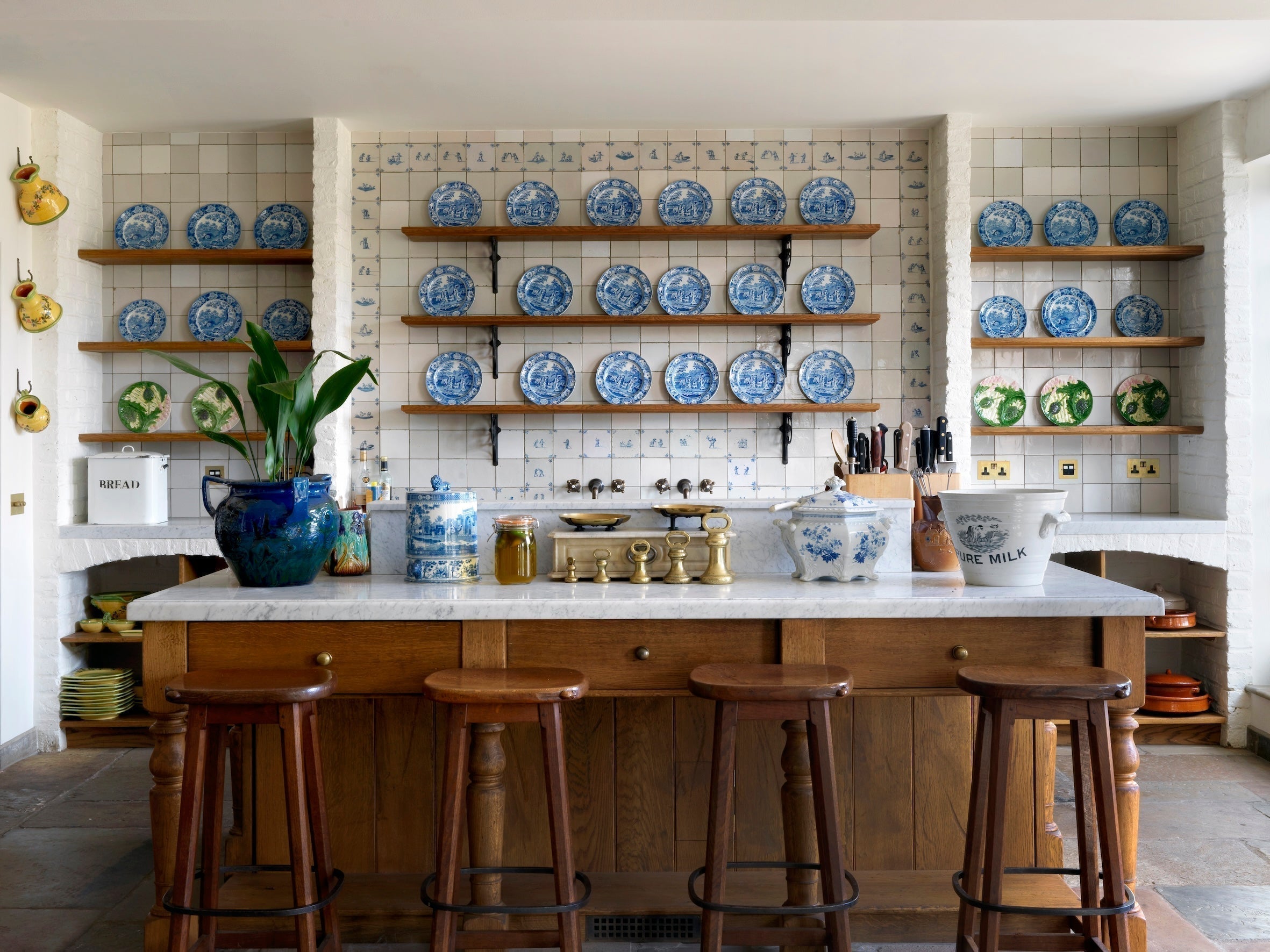
A home is rarely formed in a single moment. It is shaped gradually, through what is gathered, what is kept, and what is allowed to settle over time.
There is often a tendency to approach interiors with a sense of completion. A room is designed, furnished and resolved, as though it has reached a final state. In practice, the spaces that feel most natural are those that have evolved more quietly. They reflect decisions made over time rather than at once.
Collecting plays a central role in this. Not in the sense of accumulation, but in the act of choosing something because it resonates in that moment. An object may not have an obvious place, yet it can carry a sense of familiarity, or a connection to a particular time or place. Pieces gathered over time, perhaps found in different corners of the world or chosen during meaningful moments, begin to shape a home in a more personal way. Together, they contribute to its character and individuality, each one holding a quiet story.
This approach allows a space to remain open. A single piece can shift the direction of a room. A table, a chair, or a textile may introduce a different tone or texture that gently rebalances what surrounds it. When everything is decided too early, there is less room for this kind of change, and the space can feel more fixed than intended.
Antiques often sit comfortably within this way of thinking. They bring with them a sense of history and irregularity that cannot be replicated. Their value is not defined by rarity or age alone, but by the character they introduce. A worn surface, a softened edge, or a detail shaped by hand can anchor a room in a way that feels both grounded and interesting.
Living with objects in this way also changes how they are used. A piece is not fixed in purpose. A table might become a desk, a trunk a bedside table, a ceramic vessel something both practical and decorative. These shifts are rarely planned, but they allow a home to respond more closely to daily life.
There is also a quiet balance between old and new. Contemporary pieces can bring clarity and precision, while older elements offer depth and texture. When placed together with care, neither feels dominant. Instead, they create a sense of contrast that keeps a room from feeling resolved too quickly.
What emerges over time is not a finished interior, but one that continues to evolve. Pieces are moved, replaced, or reinterpreted. Some remain for years, others fall away. The process is ongoing, and it is this sense of evolution that gives a home its character.
To think of a space as something to be completed is to limit what it might become. When approached as something to be collected, it remains open, allowing each decision to contribute to a larger, more considered whole.


