



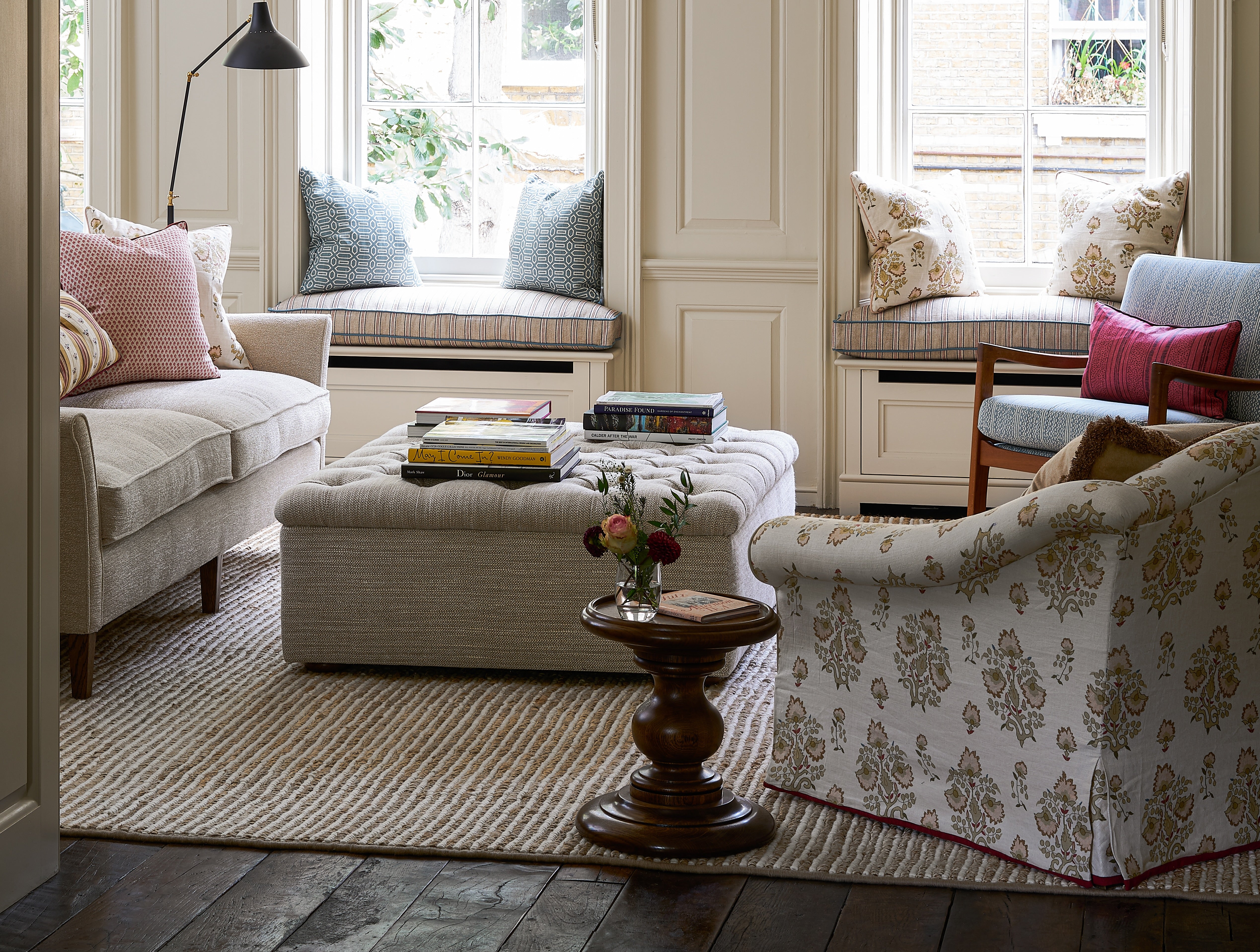
Every space carries something of its own before any intervention begins. The proportions of a room, the way light enters, the materials that have aged over time, and often the objects already within it all contribute to a quiet foundation. Designing well begins with recognising this, rather than working against it.
There is a natural tendency to approach a project with a defined idea of what it should become. In practice, the most considered interiors are shaped through response. Architecture, in particular, plays a central role. Ceiling height, window placement and the rhythm of a room set a framework that does not need to be reinterpreted, only understood. When these elements are respected, the space begins to feel resolved in a way that is difficult to replicate through decoration alone.
Often, the starting point is something more personal. A painting, a piece of furniture, or a collection that already exists can quietly determine the direction of a scheme. Colour, material and tone can all be drawn from it, allowing the room to feel cohesive without appearing overly coordinated. These moments provide a sense of continuity, linking what was there before with what is introduced.
Working within existing conditions also brings a certain clarity. Constraints, whether architectural or spatial, tend to refine decisions rather than limit them. In smaller rooms, or within listed buildings, there is a need to consider how each element functions as well as how it sits visually. Bespoke joinery, for example, can resolve practical requirements while remaining integrated within the overall composition. Nothing feels added unnecessarily, and the room retains a sense of balance.
There is also a relationship between what remains and what is introduced. Antiques and existing pieces often carry a softness that newer elements benefit from. Contemporary furniture can bring definition and structure, while older objects introduce texture and irregularity. When the two are placed together with care, the result feels layered rather than styled.
Light is another constant. It cannot be altered entirely, but it can be responded to. A room that receives softer, northern light may call for warmth in material and tone, while brighter spaces can accommodate contrast more easily. The intention is not to impose a mood, but to draw out what is already present.
This approach allows a space to feel settled from the outset. It does not rely on statement or excess, but on alignment. Each decision sits within a broader context, and nothing feels separate from the whole.
Designing with what already exists is, in many ways, an exercise in attention. It requires looking closely at what is there, understanding its qualities, and allowing those qualities to guide the process. The result is an interior that feels both considered and natural, as though it has always belonged.


