



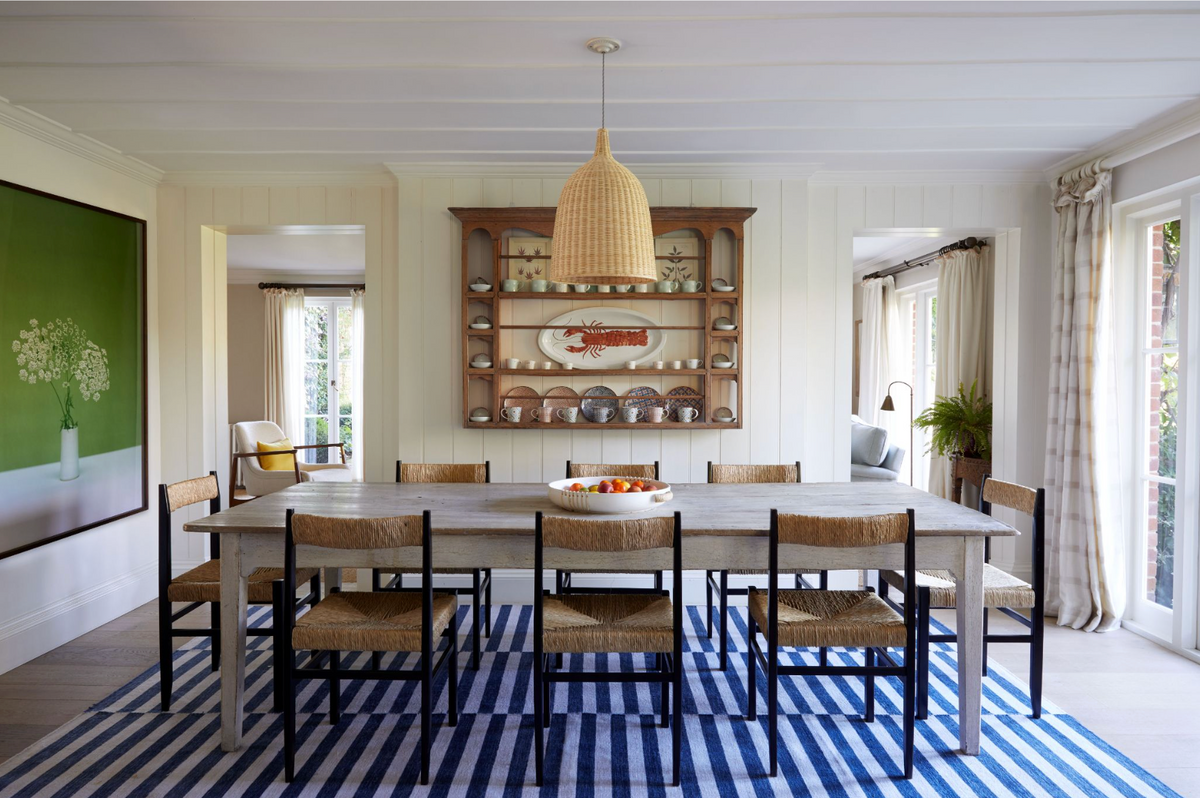
When entering a room, the eye will instinctively settle on something - a piece of furniture, an artwork, an architectural detail or perhaps a beautiful fabric. Having this point of focus gives a room a sense of balance, and makes the rest of the scheme feel more considered.
Without it, a space can feel a little unresolved. When several elements are competing for attention, it can be harder to appreciate each one individually. The room becomes a collection of parts rather than a considered whole. Establishing a point of focus brings a quiet order, allowing each element to sit comfortably in relation to something else.
It doesn’t need to be particularly bold. Often the most successful focal points are quite understated: a sofa positioned in the right place, upholstered walling, a large mirror or artwork. It is less about creating a ‘statement’ and more about giving a space something to centre itself around.

From there, other elements can play a complimentary role and restraint plays an important role. Mixing quieter pieces with those that have a little more presence allows individual furniture, fabrics and objects to be properly appreciated rather than competing with one another, creating a sense of balance.
Materiality often also contributes to this too. Variations in textures, finishes & materials can naturally draw the eye and add depth to a room. A glossy lacquered surface against a natural abaca rug, for example, can create a subtle interest and contrast without feeling overly deliberate.

There is also a relationship between focal points and the way you move through a space. In larger rooms, or where several spaces connect, different points of interest can naturally draw the eye from one area to the next. This might be a piece of furniture, an artwork, a view through a doorway or an architectural detail. Rather than everything being taken in at once, these moments give the room a gentle sense of rhythm and a sense of progression, allowing the space to unfold gradually rather than all at once.

The idea is not to create a statement for its own sake, but to give the room a centre. When this is achieved, everything else begins to align around it. The space feels more composed, and each element is understood more clearly in relation to the whole.
A room does not require many moments of emphasis. Often, a single point of focus is enough. It provides clarity, allowing the rest of the space to remain calm and considered.


